This summer has been hot and humid. As the nation celebrates the 250th anniversary of the United States, New York City’s mayor announced a proposal to open five government-run grocery stores across the city. The announcement stirred memories among many people who had fled communist countries to build new lives in the United States—the land of the free and the home of the brave.
My Summer Chores in China
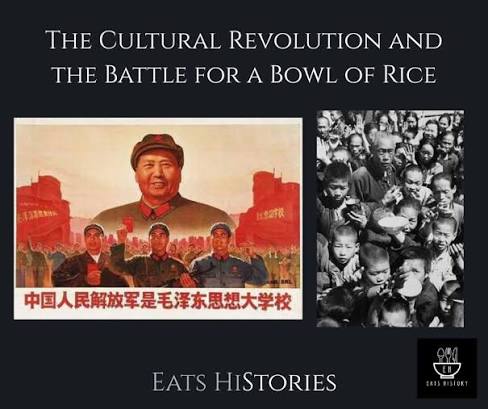
I grew up in China under the rule of Communist leader Mao Zedong. Like millions of Chinese children, I began helping with household chores at an early age. I cleaned the house, washed dishes, cooked meals, and shopped for groceries because my mother worked at a large steel mill and spent four to five hours each day commuting.
Her days were long and exhausting. She left home around 4:00 a.m. and rarely returned before 8:00 or 9:00 p.m. Although the official workday was eight hours, workers were required to stay an additional one or two hours for mandatory Communist Party meetings known as “political study” sessions. As a result, many parents did not get home until late in the evening, and children learned to cook, shop, and take care of themselves from a young age.
Every grocery store was owned and operated by the government. In a district with thousands of residents, there was typically one department store, one grocery store, and a handful of small, one-room neighborhood shops. There were also vegetable stations where trucks delivered produce from state-run farms. The stores were run-down and shabby, with peeling paint, dim lighting, and nearly empty shelves. Many looked more like abandoned warehouses or makeshift sheds than places where families shopped for their daily necessities.
Shopping was nothing like it is today. Because goods were in short supply, almost everything was rationed. A family of four, like mine, received monthly ration coupons for one kilogram of eggs (about a dozen or 13 if they were small), one kilogram of sugar, one kilogram of salt, one 800-milliliter bottle of soy sauce, one bottle of vinegar, one bottle of cooking oil, and one pound of peanut butter.
When I was seven years old, my parents began sending me to the small neighborhood store to buy these rationed items. Even a small mistake could have painful consequences. Sometimes I lost a coin and had to return home without sugar. Other times I slipped, fell, and broke the precious eggs. Those accidents usually ended with tears, scolding, and guilt—not because my parents were unkind, but because food was scarce, and every ration mattered.
Food shortages made grocery shopping an ordeal. During the summer, one of my regular chores was to stand in line for three or four hours at the neighborhood vegetable station. There was no delivery schedule. Whenever word spread that a truck carrying vegetables was coming, everyone rushed to the station and joined the line, hoping to secure a place before it grew too long. No one knew exactly when the truck would arrive, and if you were too far back in line, the vegetables could be gone before your turn, leaving your family without fresh vegetables for several days.
The uncertainty did not end there. We never knew what the truck would bring. There was no choosing among different vegetables. Whatever was unloaded that day was all that was available, and that was what we took home.
My mother often praised the children of one of her coworkers for their resourcefulness. Food was so scarce that they searched the trash bins outside the neighborhood vegetable station for discarded cabbage leaves and other wilted vegetables. They took them home, washed them as best they could, chopped them thinly to make some kind of filling, and used it to make steamed buns.
My mother recalled that the buns sometimes contained grains of sand because the children were too young to wash the vegetables thoroughly. She admired their determination to help feed their family despite the hardships.
Inspired by their example, I sometimes bought damaged vegetables—crushed tomatoes, cracked cucumbers, and bruised eggplants—that the government-run vegetable station had set aside for sale at reduced prices. They were far from fresh, but they were all my family could afford.
The Grocery Store Experience of Adolf’s Aunt
Adolf is one of my fellow church-goers. He came to the US as a very young boy when his family escaped Communism in one of the republics from the former Soviet Union. Adolf once told me a story about his aunt, who had also lived in the former Soviet Union for more than forty years. After retiring, she finally had the opportunity to visit relatives in Canada.
At 4:00 one morning, she woke everyone in the house and insisted they go to the grocery store immediately. “Today is the day the produce arrives,” she said. Her relatives tried to reassure her that grocery stores in Canada were fully stocked every day and that there was no need to wait in line or worry about shortages.
She would not believe them. Convinced that they would miss their chance to buy food, she insisted they leave. To put her mind at ease, her relatives drove her to a nearby grocery store before it opened. When the doors opened, she walked inside and found the shelves filled with fresh fruits, vegetables, meat, and other groceries.
She stared in disbelief. At first, she insisted that the store was probably reserved for Communist Party officials or other privileged people. Her relatives then took her to several more grocery stores. Each one was just as well stocked as the first.
By the end of the morning, she was in tears. According to Adolf, she quietly said, “For forty years, I was told that life in capitalist countries was terrible.”
When the Government Becomes the Grocer, Choice Vanishes
When Adolf and I heard the proposal for government-run grocery stores, it was reminiscent of two painful memories. Adolf immediately thought of his aunt’s despair, while I was taken back to my own childhood. I remembered the long lines, the empty shelves, the ration coupons, and the daily uncertainty of whether my family would have enough food. I remembered standing in line for hours, hoping a truck would arrive before the vegetables ran out.
My experiences remind me that when governments take over the role of supplying everyday necessities, shortages, rationing, and limited choices become part of daily life. I have lived through that reality, and I would never want to see the United States move in that direction. That is why the announcement of government-run grocery stores did not sound innovative or reassuring to me. It sounded like a memory I hoped I would never relive.
Mamdani, Ocasio-Cortez, Francesca Hong are only symptoms; the real disease are the voters who put them in office, voters who have clearly forgotten history and are therefore doomed to repeat it. As a survivor of Communism, I cannot forget; as Czech writer and playwright Milan Kundera brilliantly stated it, the struggle against Communism is “the struggle of memory against forgetting.”